
Foundations in Pennsylvania
A strong foundation is one of the most critical elements in any building project. While Pennsylvania follows the International Residential Code (IRC), each municipality may add its own amendments. As a result, footer and foundation requirements can vary from one area to another. Many regions share similar standards, but it’s essential to confirm the specific rules in your local jurisdiction. Always check with your local building department to ensure you’re meeting the correct requirements for your project.
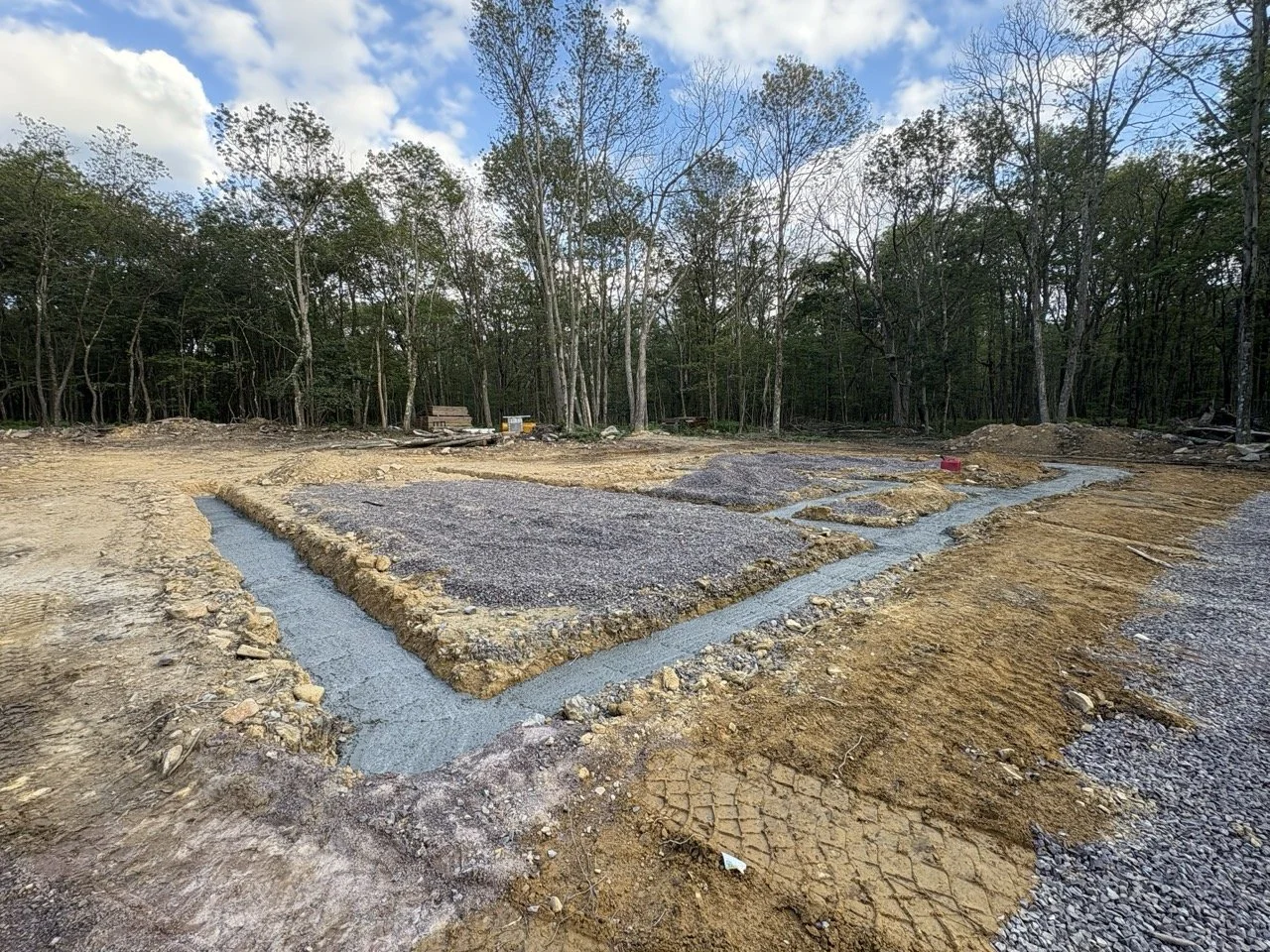
Footers
In areas that do not use frost-protected foundation designs, footings must be placed below the local frost line to prevent frost heave. In many parts of Pennsylvania, this frost-line depth is commonly set at 36 inches below finished grade. In our region, 24-inch-wide footers are typically used, though exact sizing should always follow local code requirements and soil conditions.
Foundation Types
The appropriate foundation depends on both the home’s design and site conditions. Common foundation types include the following.
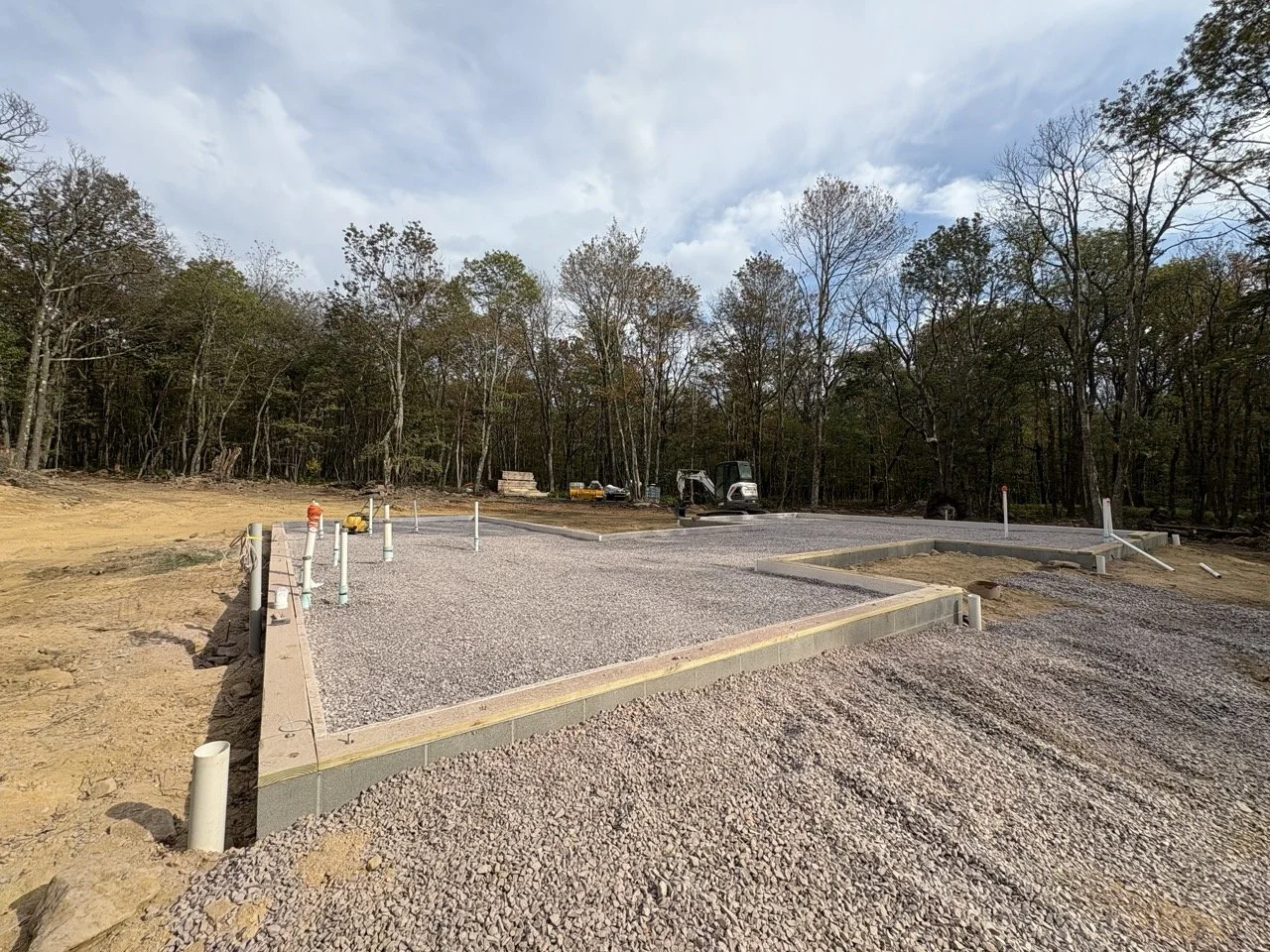
Slab Foundations
A slab foundation is a cost-effective choice for relatively flat sites and is commonly used in warmer climates.
Pros:
- Least expensive foundation option
- Can incorporate in-floor heating
- Provides a solid, stable base
- Easy to tile or finish
- Quick to frame and build
Cons:
- Plumbing buried in the slab is difficult and costly to modify or repair
- Can feel cold for residents if not heated
- Requires careful planning for utilities (e.g., conduits for electrical wiring)
- To meet frost requirements in colder climates, additional measures such as perimeter insulation or stem walls may be necessary
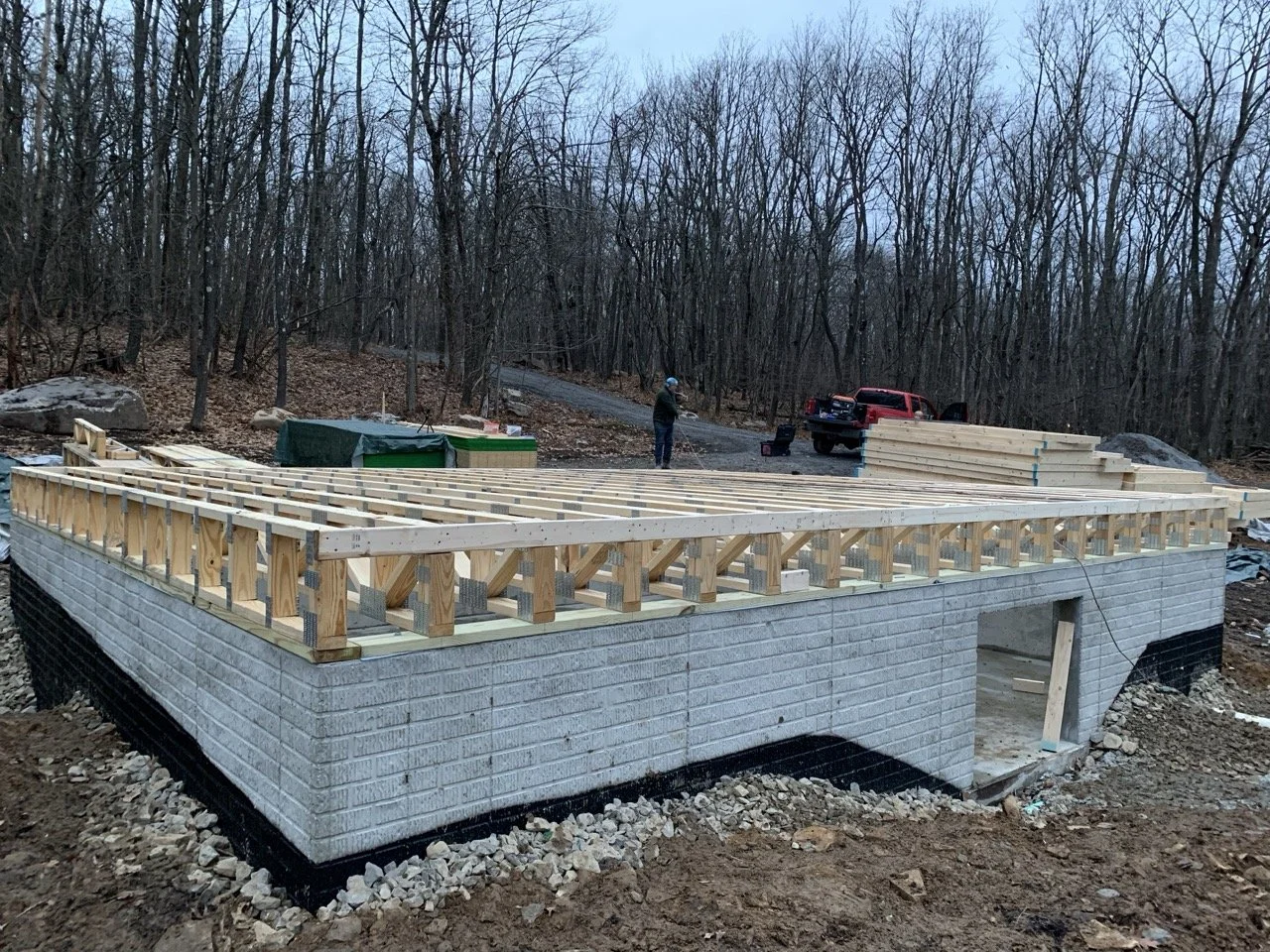
Crawl Space Foundation
Ideal for slightly sloped sites, a crawl space foundation provides a practical solution while offering additional functional space.
Pros:
- Extra room for utilities such as water heaters, heat pumps, and storage
- Plumbing and electrical systems are easily accessible for maintenance and future renovations
- Elevates the home above grade, reducing potential moisture issues from the ground
Cons:
- Generally more expensive than a slab foundation
- Additional costs for floor joists/trusses and insulation
- Humidity control can be challenging and lead to costs over time (ie. de-humidifier)
- Requires a floor drain or sump pump to manage water
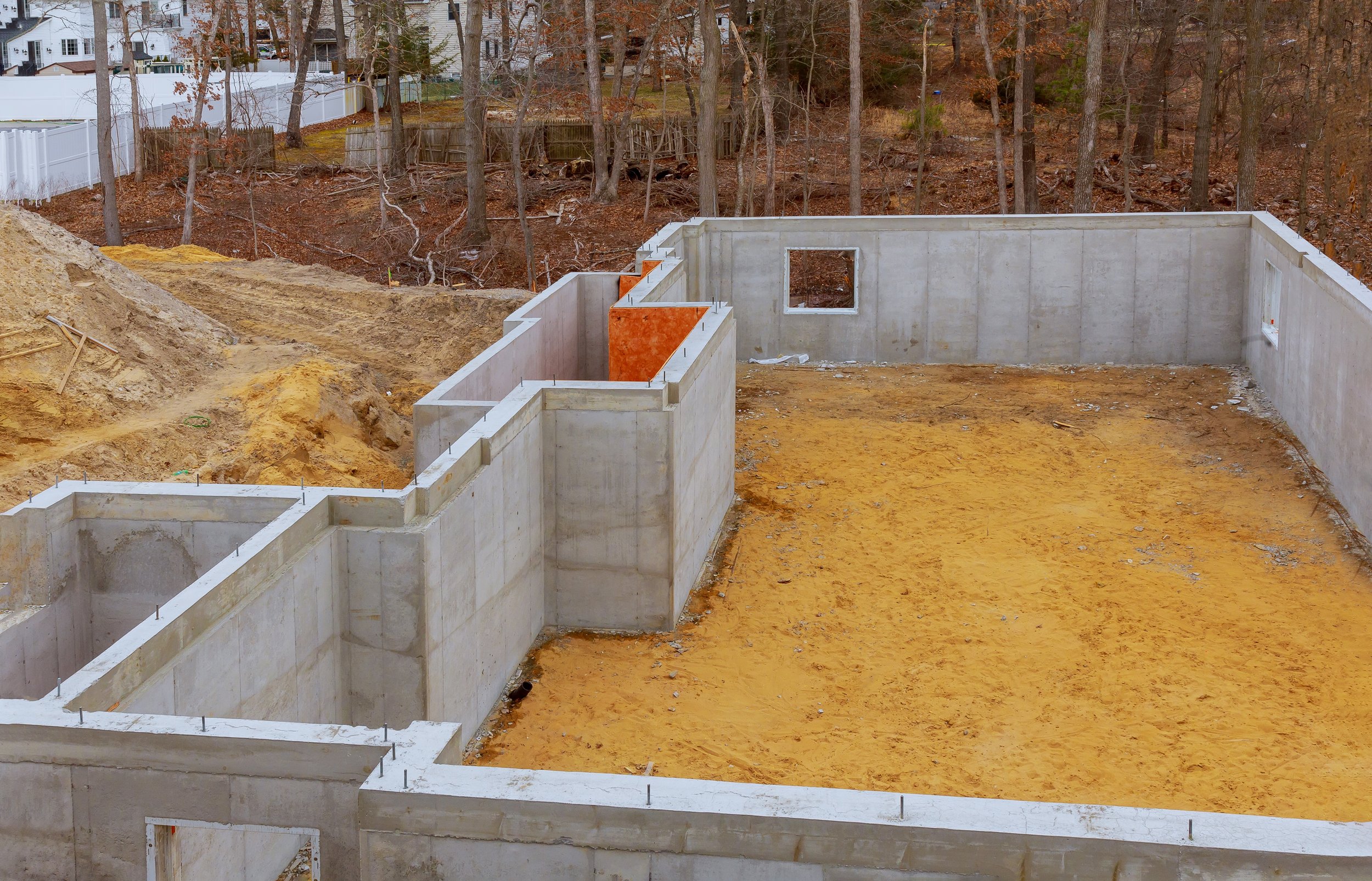
Full Basement Foundation
A full basement foundation maximizes the use of excavation and provides valuable additional living or usable space, making it a popular choice for many homeowners.
Pros:
- Adds significant square footage for living or storage
- Utilities are easily installed and accessible for maintenance or renovations
- Well-suited for sloped sites
- Can reduce the overall footprint of the foundation above grade
Cons:
- Typically the most expensive foundation option
- Requires proper insulation and a vapor barrier to ensure long-term usability
- Additional costs for framing, concrete, and finishing
Conclusion
Choosing the right foundation is a critical decision that affects your home’s durability, comfort, and long-term usability. Each type of foundation—slab, crawl space, or full basement—offers unique advantages and considerations. Slab foundations are cost-effective and quick to build, crawl spaces provide accessible utilities and storage, and full basements maximize living space and flexibility.
Ultimately, the best choice depends on your site conditions, budget, and how you plan to use your home. By understanding the pros and cons of each option, you can make an informed decision that ensures a strong, lasting foundation for your property. Always consult with local building codes and professionals to ensure your foundation meets both regulatory and practical needs.
